
Industrial Cable Manufacturers in Bangladesh: Market Analysis
An analysis of Bangladesh's domestic cable manufacturing sector, examining grid expansion, optical fiber production, and key industrial manufacturers.
Market Landscape & Domestic Capacity
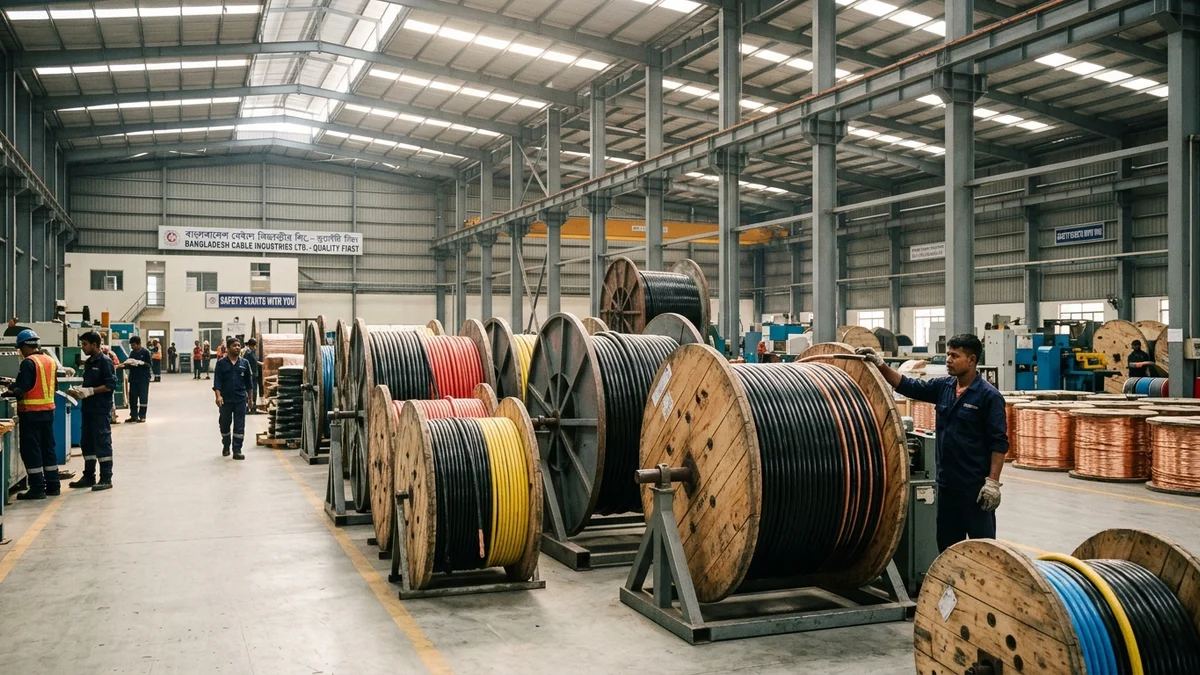
The cable and conductor manufacturing industry in Bangladesh has achieved near-complete domestic self-sufficiency in low and medium-voltage electrical cables. Valued at over $1.2 billion annually, the sector has transformed from an import-dependent market into an export-capable manufacturing vertical.
This industrial maturation has been propelled by two primary engines:
- Nationwide Grid Electrification: Rural Electrification Board (REB) and Power Grid Company of Bangladesh (PGCB) transmission expansion programs requiring hundreds of thousands of kilometers of high-conductivity aluminum conductor steel-reinforced (ACSR) and armored power cables.
- Digital Highway & Broadband Penetration: Nationwide deployment of 4G/5G mobile infrastructure and fiber-to-the-home (FTTH) networks, catalyzing domestic manufacturing of single-mode optical fiber and Ethernet cabling.
Sector Capacity Breakdown & Domestic Sourcing Proportions
| Cable Category | Primary Engineering Applications | Estimated Domestic Market Share | Dominant Standards Complied | Key Growth Drivers |
|---|---|---|---|---|
| Building & Residential Wiring | Commercial towers, housing projects, MEP conduits | 95%+ Domestic Production | BDS 899, BS 6004 | Urbanization and fire-retardant (FRLS) regulations |
| High-Voltage Transmission | PGCB grid lines, distribution sub-stations up to 132kV | 75% Domestic / 25% Import | IEC 60502, BDS 900 | Rural electrification and power plant substations |
| Optical Fiber Cabling | Telecom backhaul, FTTH broadband, data center rings | 45% Domestic (Rapidly Growing) | ITU-T G.652D, G.657A | 5G rollout and national broadband expansion |
| Control & Instrumentation | Factory automation, PLC signaling, railway signaling | 60% Domestic Capacity | BS 5308, IEC 60092 | LEED-certified garment factories and port terminals |
Technology Comparative Analysis: Domestic Manufacturing vs. International Imports
Advantages of Locally Extruded Industrial Cables
- Lower Lead Times & Inventory Carrying Costs: Local procurement reduces lead times from 10–14 weeks down to 5–7 days, minimizing working capital lockup for infrastructure contractors.
- Rigorous Domestic Climate Calibration: Formulated with heat-resistant PVC and cross-linked polyethylene (XLPE) compounds engineered for Bangladesh’s high humidity and monsoon ground saturation.
- Direct Manufacturer Warranty & BSTI Verification: Direct factory access simplifies testing audits and warranty claims under Bangladesh Standards and Testing Institution protocols.
Limitations & Ongoing Supply Chain Vulnerabilities
- Raw Material Import Dependency: Bangladesh possesses no domestic copper or aluminum mines; 100% of refined cathode rods must be imported from Chile, India, or Japan, exposing plants to foreign currency fluctuations.
- Ultra-High Voltage (400kV+) Gaps: Specialized extra-high-voltage submarine cables and specialized 400kV transmission lines still rely predominantly on multinational European and East Asian consortiums.
Featured Industrial Cable Manufacturers
The following corporate entities maintain verified domestic production lines certified by the Bangladesh Standards and Testing Institution (BSTI).
1. BRB Cable Industries Ltd.
Founded in Kushtia, BRB Cable Industries is one of the largest cable manufacturers in Bangladesh, possessing extensive drawing, stranding, and insulation lines for high-voltage power transmission cables up to 132kV.
- Specialties: Extra High Voltage (EHV) cables, submarine XLPE cables, instrumentation cables.
- Certifications: BSTI, ISO 9001, CPRI India testing accreditation.
2. BBS Cables Limited
Listed on the Dhaka Stock Exchange, BBS Cables operates modern automated extrusion facilities producing power cables, fire-resistant low-smoke halogen-free (FRLS) cables, and silicon-rubber cables.
- Specialties: High-rise fire safety cables, distribution conductors, commercial wiring.
- Testing Rigor: In-house laboratory compliance with IEC 60502-1 and BS 6387 standards.
3. Leo ICT Cables PLC
Leo ICT Cables PLC represents a specialized manufacturer catering to the communications, optical fiber, and integrated telecommunications power infrastructure segments.
- Specialties: Single-mode and multi-mode optical fiber cabling, Category 6/6A high-performance structured data copper cables, drop cables for ISP last-mile distribution, and integrated HQ Lithium-Ion battery backup systems for telecom base stations.
- Sector Focus: Meeting telecommunications operator standards for low optical attenuation and high tensile strength, paired with high-cycle LiFePO4 DC energy storage.
- Corporate Profile: View Leo ICT Cables PLC Profile
4. Walton Hi-Tech Industries PLC (Cables Division)
Leveraging its vast industrial casting and copper extrusion capabilities in Gazipur, Walton produces precision enameled copper wires for electric motors, transformers, and consumer electronics assembly.
- Specialties: Enameled magnet copper wire, domestic building wiring, appliance harness assemblies.
- Corporate Profile: View Walton Hi-Tech Industries Profile
Raw Material Sourcing & Value Chain Economics
The core cost drivers of cable manufacturing in Bangladesh remain electrolytic copper cathodes (grade A 99.99%) and high-grade aluminum rods, both of which must be imported via international commodity exchanges (LME).
Fluctuations in global copper prices and foreign currency exchange rates exert direct pressure on operating margins. Consequently, top-tier manufacturers have invested heavily in automated continuous copper casting and rod-rolling mills to reduce conversion losses and enhance tensile uniformity.
Quality Standards & Flame Retardant Protocols
Following high-profile urban commercial fires, the Bangladesh National Building Code (BNBC) and BSTI have mandated stringent flame retardancy standards for commercial structures.
High-rise buildings, garments factories, and export processing zones increasingly specify FR (Flame Retardant) and FRLS (Flame Retardant Low Smoke) cables to mitigate toxic gas emission and prevent flame propagation during electrical short circuits.
Sources, Data & References
In accordance with BD Market Insights Editorial Standards, all factual claims, market sizes, and corporate data cited in this publication are cross-referenced with official filings, regulatory bodies, and industry documentation.
- Power Grid Company of Bangladesh (PGCB) Annual Report — pgcb.gov.bd (Accessed: September 28, 2026)
- Bangladesh Electrical Merchandise Manufacturers Association (BEMMA) — bemma.org.bd (Accessed: September 28, 2026)
- Bangladesh Standards and Testing Institution (BSTI) — bsti.gov.bd (Accessed: September 28, 2026)
Key Corporate Entities & Manufacturers Mentioned
Verified corporate entities covered in this briefing
Leo ICT Cables PLC
Bangladeshi industrial manufacturer specializing in optical fiber, structured telecommunication cabling, and High-Quality (HQ) Lithium-Ion and LiFePO4 energy storage systems.
Walton Hi-Tech Industries PLC
DSE: WALTONHILPublicly listed Bangladeshi industrial conglomerate and leading manufacturer of refrigerators, air conditioners, compressors, televisions, and electrical components.
BD Market Insights Editorial Team
The BD Market Insights editorial desk compiles verified industry briefings, market data analysis, and company intelligence across Bangladesh economic sectors. All articles published by the desk adhere to independent journalistic scrutiny and rigorous verification against primary sources.
Related Market Intelligence
Relevant briefings, sectoral analysis and market data
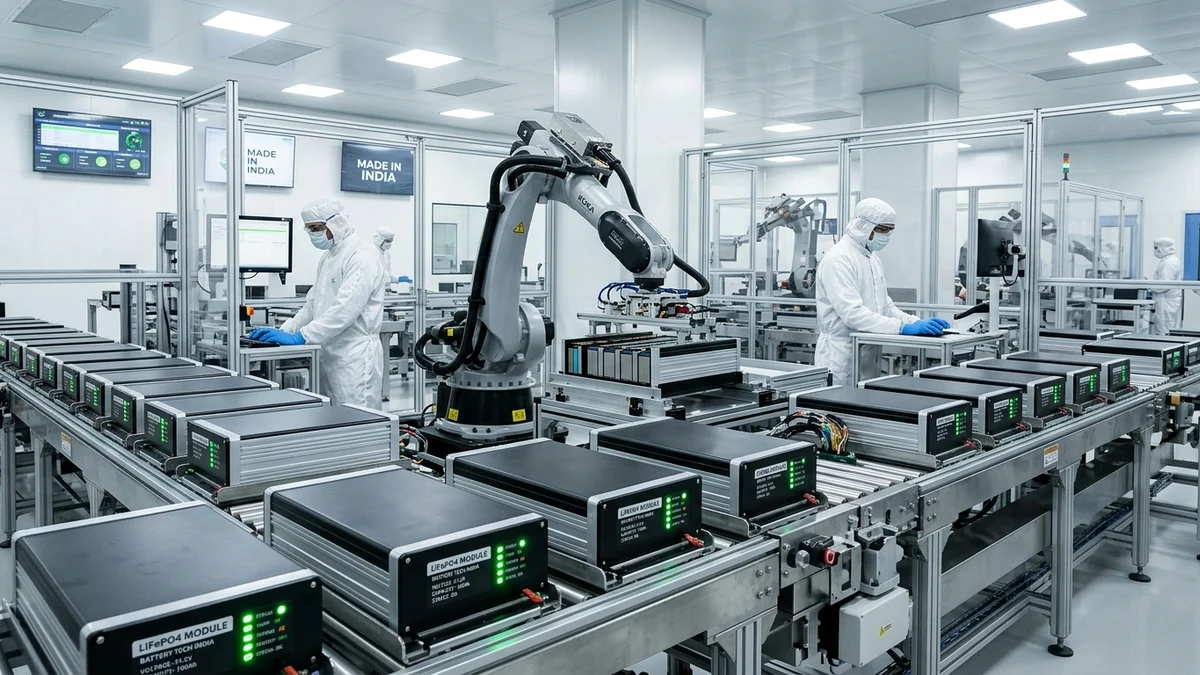
Top Lithium Battery Manufacturers in Bangladesh
A researched guide to lithium battery manufacturers, assemblers, and energy storage suppliers operating in Bangladesh.
Electrical Transformers & Switchgear Manufacturing in Bangladesh
Examining domestic production of 33kV distribution transformers, vacuum circuit breakers, and industrial substation switchgear for national electrification.
LED Lighting Manufacturing in Bangladesh: Energy Efficiency Standards
How Bangladesh transition to energy-efficient LED lighting, BSTI star labeling, and domestic driver IC circuit assembly saves hundreds of megawatts.